If you’re looking for the best CDL school, one of the first decisions you’ll make is whether to pay for training out of pocket or go through an employer sponsored CDL training program.
Both paths lead to getting your commercial driver’s license, but they come with different trade-offs; time, money, and flexibility.
In this post we’re going to breakdown the advantages and disadvantages of both options: Employer Sponsored training and Private CDL training programs to see which is best.
After being a trucker for over 20 years, I’ve seen drivers succeed going down either path, but one tends to make more sense for most people just starting out.
Let’s look at how they really compare.
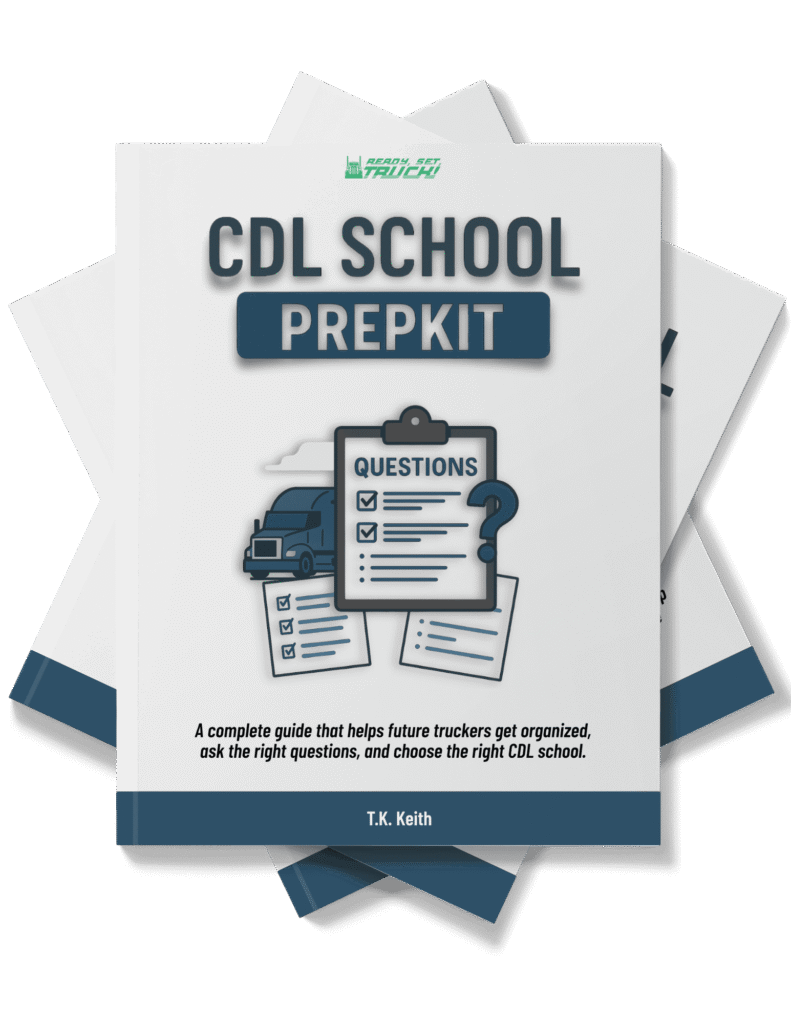
The CDL School Prepkit helps you save time when choosing a CDL school. With 30+ recruiter questions, side-by-side comparisons of good vs bad schools, what to pack and more all designed to help easily prepare to start your trucking career.
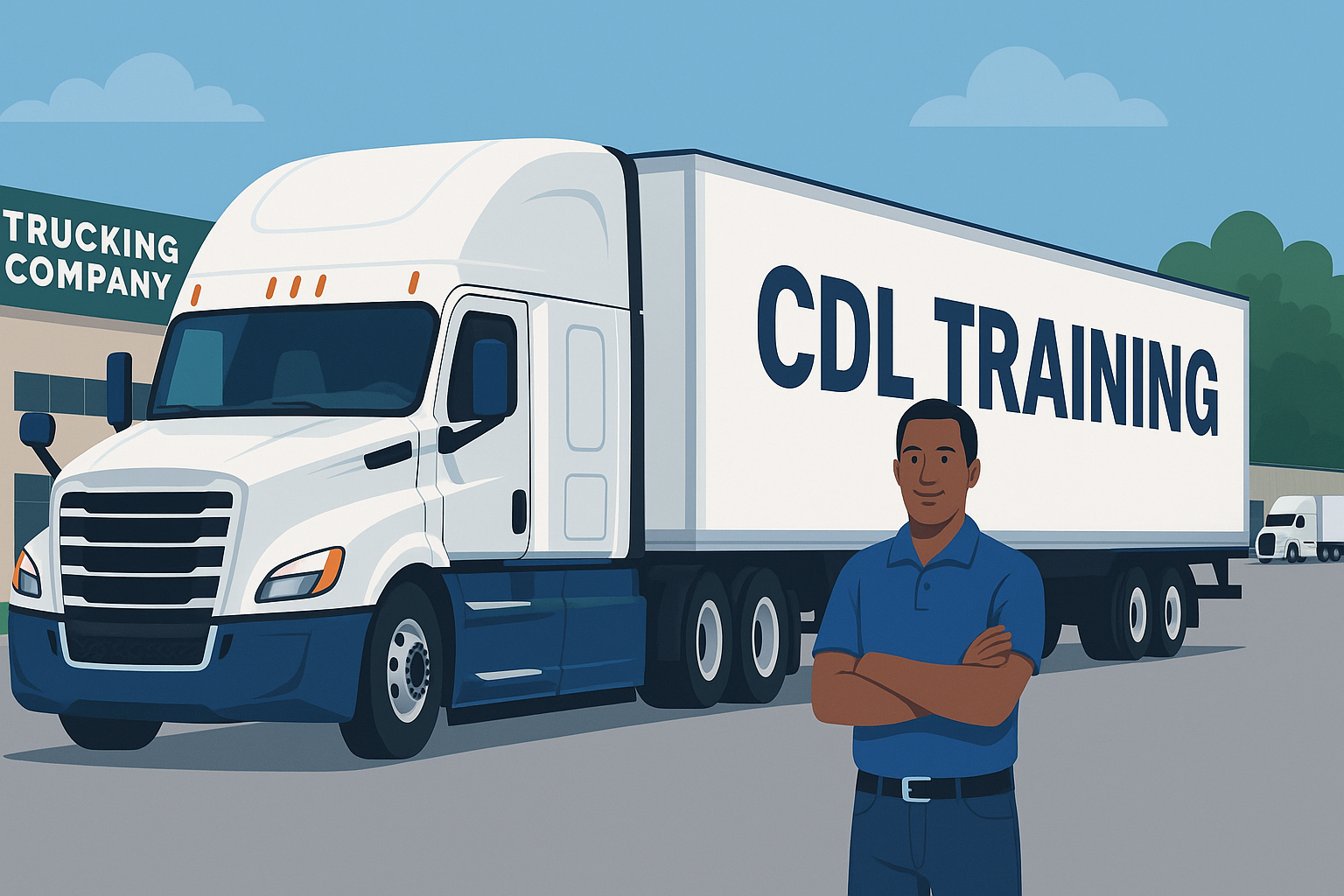
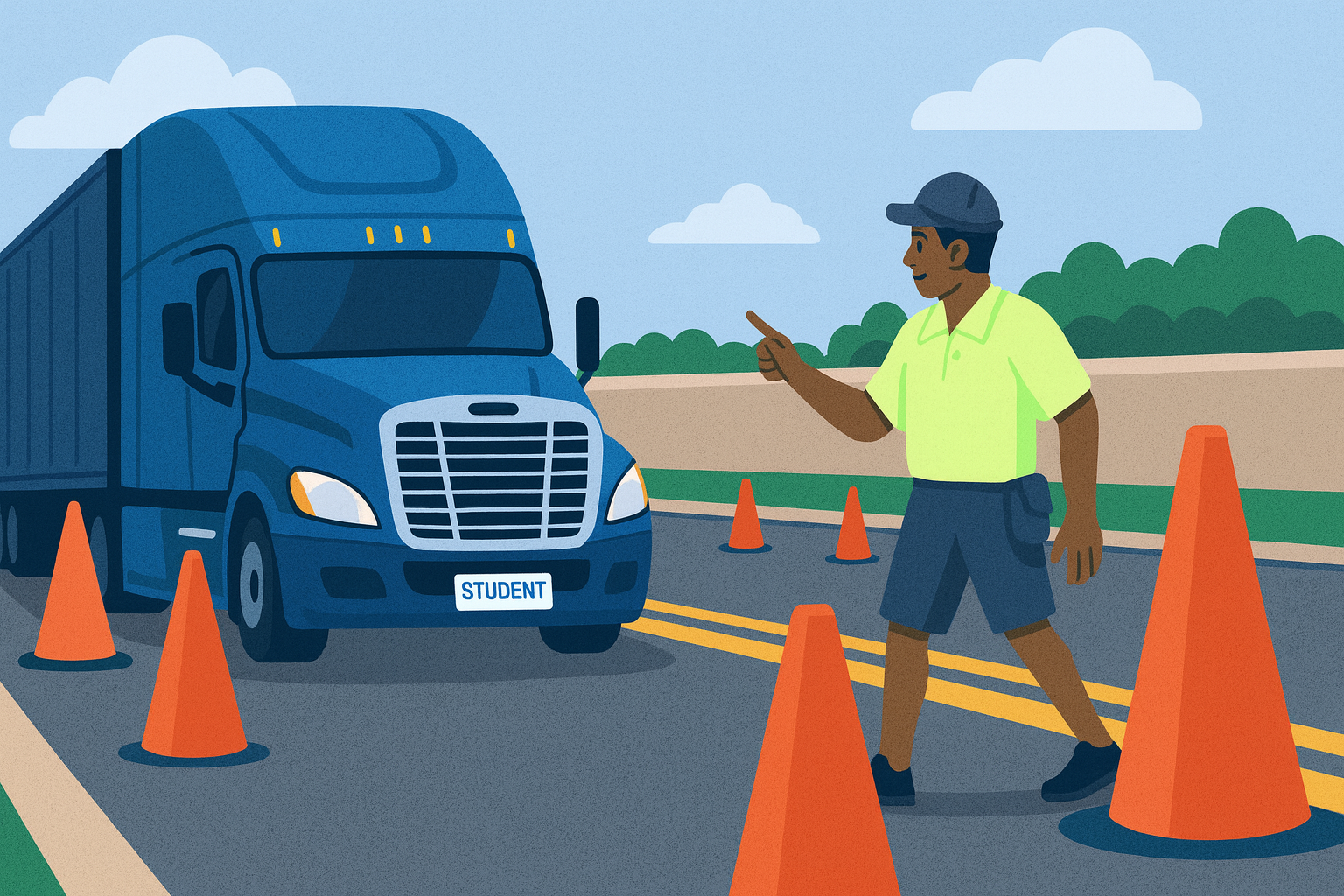
Employer sponsored CDL training is the most common way people earn their commercial driver’s license, especially if they’re brand new to trucking.
Here’s how it works; a trucking company pays for your schooling upfront in exchange for an agreement that you’ll work for them after you graduate.
That means your tuition, lodging, travel and sometimes even meals are covered.
You’ll train with their trucks, learning their procedures, and when you finish, you’ll already have a job lined up.
For most new drivers, it’s the easiest and most affordable way to start a trucking career without taking out loans or using their savings.
Jason’s Experience with Employer Sponsored CDL Training:
Jason had been looking at getting into trucking for a few months but didn’t have the extra $6,000 a private school wanted upfront. A recruiter told him about a trucking company CDL training program that would train him, house him, and even cover his bus ticket. 11 weeks later, Jason had his CDL, a company truck, and going out on his first solo run.
“It wasn’t easy, but it got me started without a lot of debt and that’s what I wanted.” Jason L.
Quick Takeaway:
Employer sponsored programs remove financial barriers and pretty much guarantee a job, but they usually require a contract. These contracts tend to be between 12-18 months. During this time, you’re earning experience, learning new skills and how to safely drive a truck for long hours.
Employer sponsored programs are made for people who want to get started but don’t want to have extra debt before they even hit the road.
They’re structured, affordable, and make sense, everything a new truck driver needs to start earning experience and more money as quickly as possible.
Here’s why this route works so well for most new drivers:
You don’t have to pay upfront.
You’ll start earning faster.
You’re guaranteed a job.
You’ll be trained by the company same you’ll work for.
You’ll build experience right away.
Karla’s Experience with Company Sponsored CDL Training:
Karla didn’t have money for private school, but she had a plan. She joined an employer sponsored program that paid for everything; travel, hotel, and meals. She finished her training, got her CDL, and started earning paychecks within two months.
“I had to work for with them for a year but that year got me experience. Now I can go and work anywhere.” Karla J.
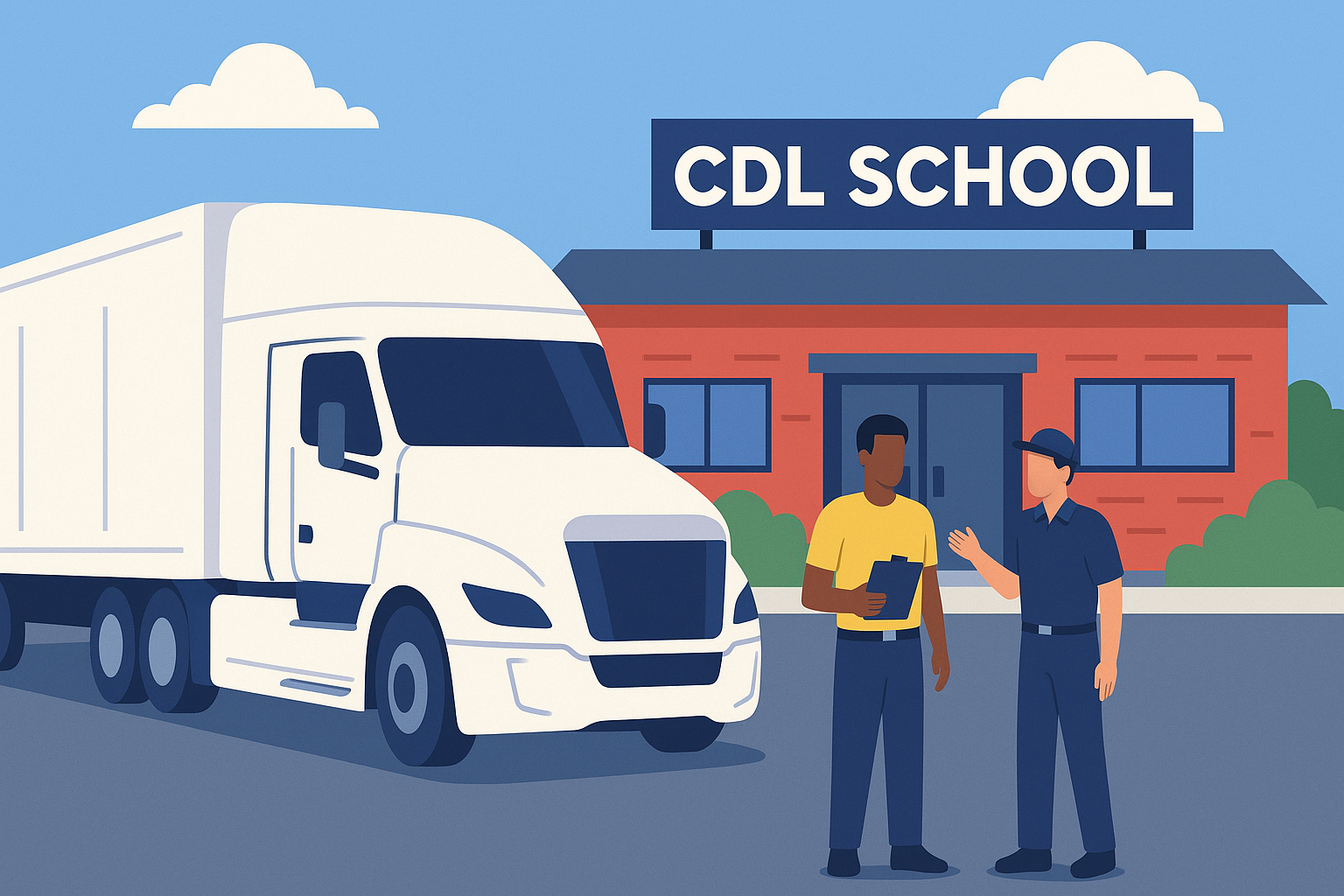
Private CDL schools are independently owned training programs that teach you how to earn your commercial driver’s license without being tied to a specific trucking company.
You pay for the training out of pocket; either upfront, through financing, or with help from grants or the GI Bill.
Classes are typically held onsite with a mix of classroom sessions, driving range practice, and road training.
Depending on the school, programs usually run anywhere from 4-8 weeks. Once you graduate and pass your test, you’re free to apply to any trucking company you want.
Having flexibility is the biggest advantage of going to a private CDL school.
You’re not locked into a contract, and you can take your time finding a company that fits your goals, schedule, and pay preferences.
Monica’s Experience with Private CDL Training:
Monica wanted the freedom to pick her own company after getting her CDL, so she paid for a private school near home. The training was great, but it cost her around $4,500 upfront. It also took her almost two months to find a job afterward.
“I learned a lot,” she said, “but it would’ve been easier if I had something lined up before graduation.” Monica R.
Quick Takeaway:
Private CDL schools give you more freedom and control over where you work, but that independence comes with a price. You’ll need to cover your tuition and expenses upfront, so planning ahead is key.
Private schools are a solid option for people who value freedom and don’t mind covering their own costs upfront.
They offer flexibility and independence, but they also require planning and financial commitment.
Here’s why some potential drivers choose this option:
You get to choose your employer.
Flexible scheduling.
Financial aid options.
Personalized training.
Anthony’s Experience with Private CDL School:
Anthony had been saving for months before enrolling in a private CDL school near Atlanta. He liked having control over his training schedule and the freedom to choose where to work after graduation. The school helped him connect with a few local carriers, and within two weeks of getting his CDL, he got a regional driving job that paid better than he expected.
“It was worth the investment, I paid for my freedom upfront, and I’m not stuck with a company for a year or more.” Anthony F.
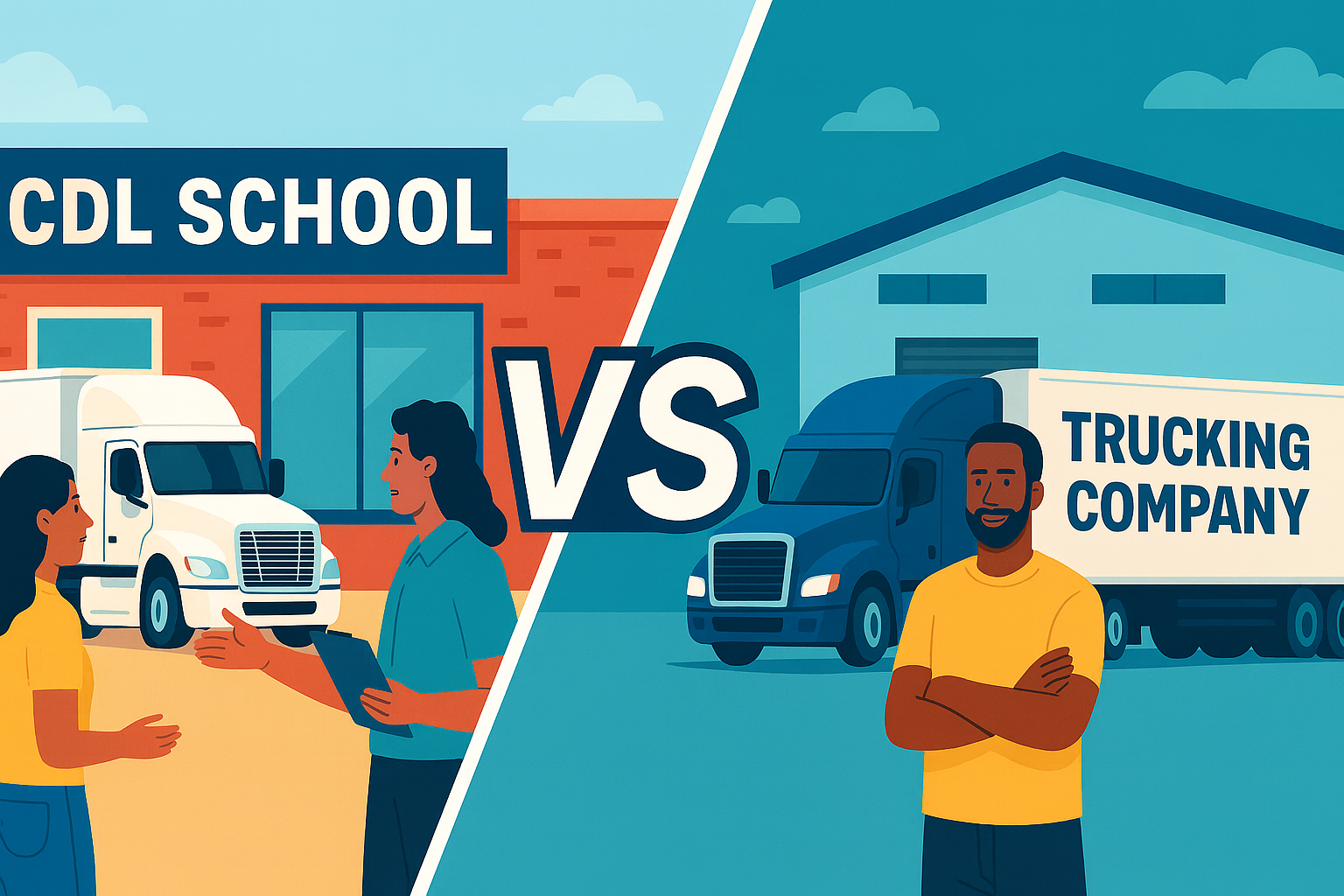
While Private CDL Schools give you more freedom and flexibility, they also require more planning, time, and money upfront.
Employer Based CDL Training programs, on the other hand, take away most of the financial pressure by covering your costs but again, they come with commitments of their own.
Both paths can get you your CDL, but how they get you there (and what happens next) can be very different.
Let’s compare them side-by-side so you can see which path makes the most sense for you.
$0 upfront - company covers tuition, travel, and sometimes lodging
Work contract (usually 8–12 months)
3–5 weeks in school + on-the-road training
Guaranteed job after graduation
Often unpaid during school; paid once driving with a trainer
Must work for trucking company first
Drivers who want to start fast and avoid debt
$4,000–$8,000 paid by the student
No contract, choose any company after graduation
4–8 weeks, depending on the school
Not guaranteed, though some offer placement help
No pay during training
Freedom to choose where to work
Drivers with savings or outside funding who want flexibility
Both Employer Sponsored and Private CDL Training Programs will help you get your license and start your career but it just depends on what you need most right now.
If money is tight or you want to start driving as soon as possible, an employer-based training program is the best CDL school move (my personal choice).
You won’t have to worry about tuition, travel, or housing, and you’ll already have a job lined up once you finish.
It’s the quickest, most direct route into the industry, especially for new drivers who just want to get rolling.
But if you’ve saved up or have outside funding, a private CDL school might fit better.
You’ll have more freedom to pick the carrier, pay, and routes that match your goals and you won’t be tied to a contract.
Just remember that you’ll be investing either time or money upfront before you start earning.
There’s no one-size-fits-all answer to this question. The best choice depends on your situation, your finances, your timeline, and how soon you want to be on the road.
The key is starting with a program that sets you up to succeed, not just one that gets you through the test.
However, from my perspective, Employer Sponsored CDL Training Programs is the way to go!
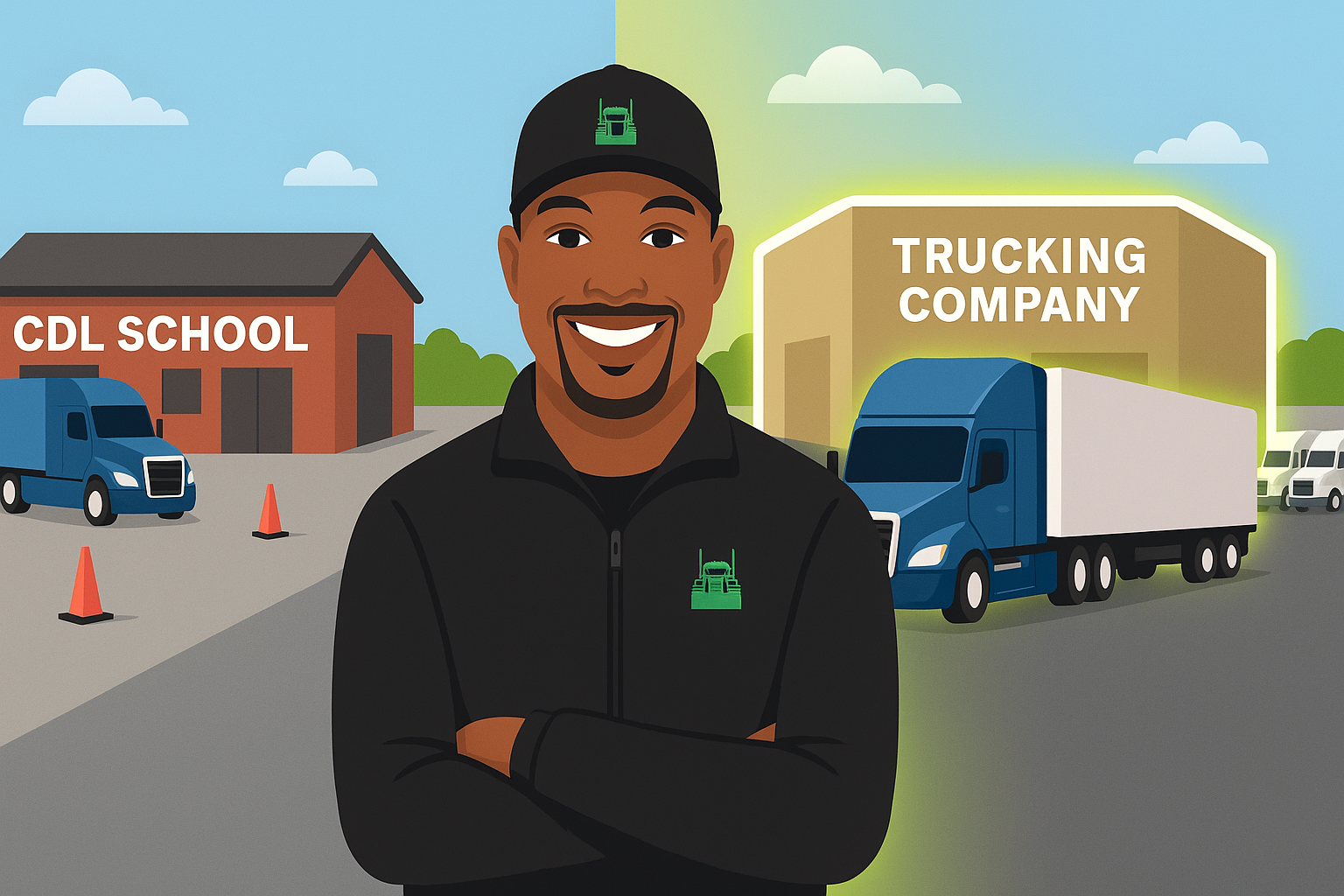
If I had to start my trucking career today, I’d go with employer sponsored CDL training and here’s why.
For most new drivers, the hardest part isn’t learning how to drive a truck. It’s getting the chance to start without going broke.
Employer sponsored training programs remove that worry.
You don’t have to come up with 1000’s of dollars, wait for funding or take out a loan before you even have a chance to make your first dollar.
A trucking company invests in you first, and in exchange, you invest your time and effort into learning how to do the job properly.
That’s a no-brainer to me.
You also start building experience immediately and in trucking, experience is everything.
The sooner you’re out there running loads, the faster you’ll grow and the more valuable you’ll become.
Private schools can teach you how to pass the CDL test, but employer sponsored programs teach you what it’s really like to work in trucking.
Sure, there’s a contract you have to sign. You’ll be committed to that company for a year or so but during that time, you’re earning, learning, and gaining experience.
After your contract is up, you’ll be an experienced trucker with no debt from your CDL following you around.
At the end of the day, employer-based CDL training programs just makes sense for most new drivers.
It’s simple, almost free, and helps you fast track your trucking career from day one.
If you’re serious about getting into trucking and want to start strong, this is the road I’d take, every single time!
No matter which direction you choose, the goal is the same; getting your CDL and starting a career that can completely change your life.
But choosing how you get there can make a big difference in how fast you reach your goals and how much it costs to get started.
If you’re still undecided and comparing schools, take as much time as you need to compare schools, talk to recruiters, and see what fits your situation best.
Every program looks good on paper, but the details; cost, contracts, instructors, and equipment make all the difference once you get there.
Actually, that’s exactly why we created CDL School Prepkit.
It walks you through how to choose the right school, what questions to ask recruiters, and even a checklist of what to pack (and what to leave at home).
More than anything, it helps you see past where you are now so you can make the best decision for where you want to go.
Just remember, what matters isn’t how you start, but that you start with a plan that sets you up to succeed long term in trucking.
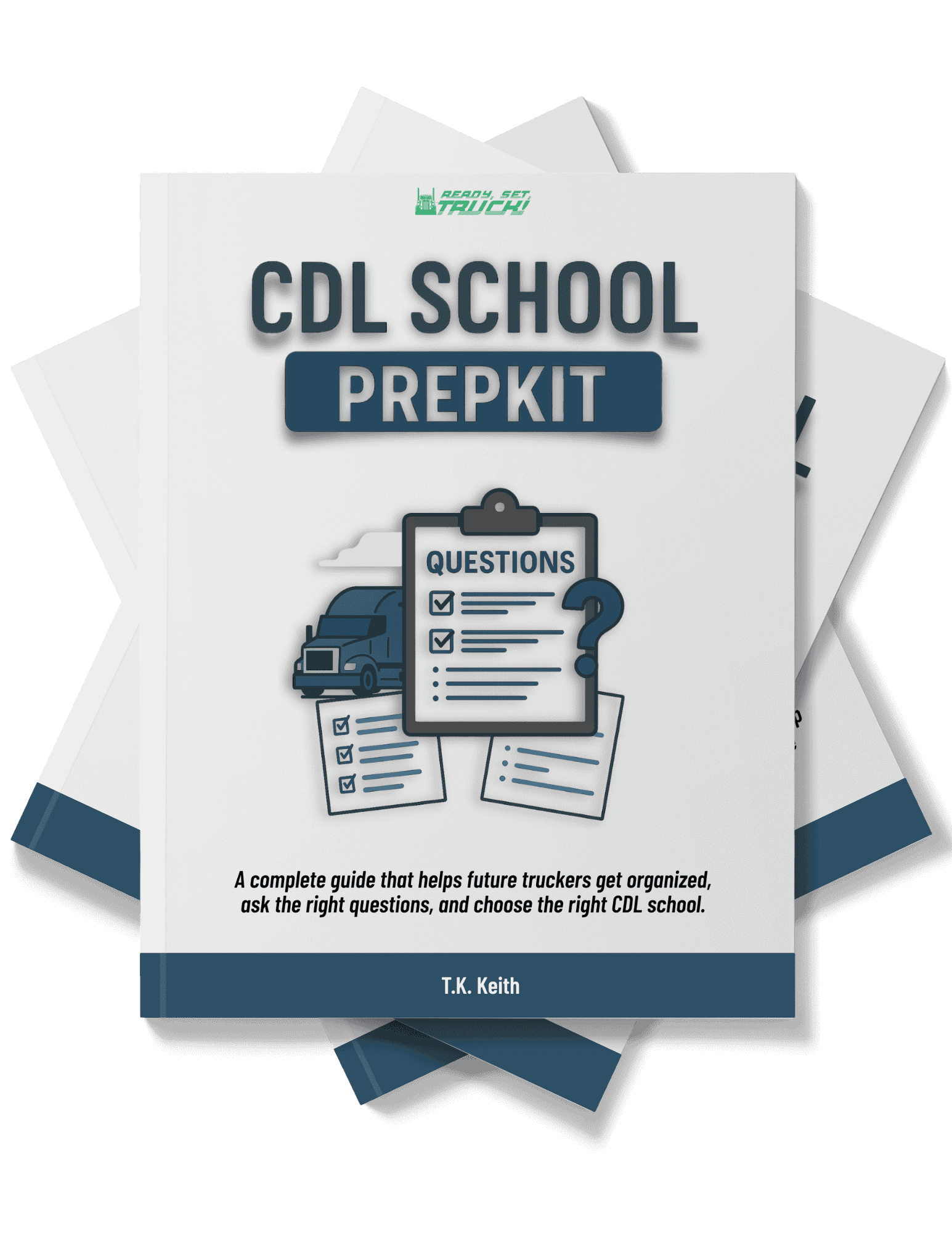
The CDL School Prepkit helps you save time when choosing a CDL school. With 30+ recruiter questions, side-by-side comparisons of good vs bad schools, what to pack and more all designed to help easily prepare to start your trucking career.
Do company sponsored CDL schools pay you during training?
Some do, but most don’t start paying until you begin on-the-road training with a company trainer. A few carriers offer a small weekly allowance or cover meals during school, but your real pay starts once you’re behind the wheel hauling loads.
What happens if I leave a company sponsored CDL training program early?
If you leave before completing your contract, you’ll usually owe the company for part or all of your training costs. Most carriers prorate the amount based on how long you worked after graduation, but every contract is different. It’s not meant to trap you — it’s simply how companies recover the cost of training if a driver leaves early. Always read the fine print so you know exactly what you’re agreeing to before you sign.
Are private CDL schools better for finding local jobs?
They can be. Many private schools partner with regional or local carriers, especially if they’ve built good relationships with nearby companies. If your goal is to stay close to home, ask schools about which employers recruit from their program before enrolling.
How long does CDL training take?
Most CDL training programs last between 4-8 weeks, depending on the school and how often you train. Company sponsored programs tend to move a little faster because they’re designed to get you out on the road quickly.
Is “free” CDL training really free?
Not really. Company sponsored CDL schools are free upfront, but you’ll have to commit to driving for that company for a set amount of time after graduation. It’s still a great tradeoff if you’re serious about starting your career, just remember that your time is part of the tradeoff.
What’s the biggest mistake new drivers make when choosing a CDL school?
Rushing to jump into the first program that says “free training” without reading the details. Take your time to compare schools, ask about costs, schedules, and contracts, and make sure the school is listed on the FMCSA’s Training Provider Registry (TPR) before you enroll.
$0 upfront - company covers tuition, travel, and sometimes lodging
Work contract (usually 8–12 months)
3–5 weeks in school + on-the-road training
Guaranteed job after graduation
Often unpaid during school; paid once driving with a trainer
Must work for sponsoring company first
Drivers who want to start fast and avoid debt
$4,000–$8,000 paid by the student
No contract, choose any company after graduation
4–8 weeks, depending on the school
Not guaranteed, though some offer placement help
No pay during training
Freedom to choose where to work
Drivers with savings or outside funding who want flexibility
$0 upfront - company covers tuition, travel, and sometimes lodging
Work contract (usually 8–12 months)
3–5 weeks in school + on-the-road training
Guaranteed job after graduation
Often unpaid during school; paid once driving with a trainer
Must work for sponsoring company first
Drivers who want to start fast and avoid debt
$4,000–$8,000 paid by the student
No contract, choose any company after graduation
4–8 weeks, depending on the school
Not guaranteed, though some offer placement help
No pay during training
Freedom to choose where to work
Drivers with savings or outside funding who want flexibility

T.K. Keith – “The Truckers Trainer”
After spending 20+ years as a trucker and over six years training new drivers. I know first hand the ups, downs, and lessons that come with the first year behind the wheel. Ready, Set, Truck! is my way of helping new drivers build confidence, make more money, and find success in trucking.
Readysettruck.com
No elements found...
Ready, Set, Truck! helps drivers succeed in their first year on the road with tools, tips, and resources to avoid going broke, burning out, or giving up.
TOOLS
Copyright © 2025 Ready, Set, Truck! LLC. • All Rights Reserved • Privacy Policy • Legal Policies