No elements found...
Everyday, new drivers step up to take their CDL test thinking they’ve got it under control.
They’ve practiced.
They’ve studied.
They’ve backed between cones a hundred times.
But once the test starts, things changes. Hands get sweaty. Minds get foggy. The simple things start feeling complicated.
The reality is, most people don’t fail the CDL test because they can’t drive. They fail because of a few avoidable mistakes.
Mistakes that come from being afraid, rushing, or not knowing what examiners really look for.
In this guide, you’ll learn exactly what those mistakes are, how the CDL test is scored, what “passing” really means, and what you can do to stay calm, focused, and in control from start to finish.
By the end, you’ll know how to walk into your test confident, handle the pressure like a pro, and leave with your CDL in hand.
Before anyone can call themselves a real truck driver, they’ll need to prove that they can handle a truck.
The CDL test (also called the commercial driver’s license skills test) is where this happens.
It’s not a classroom exercise or a practice drill. It’s the real examination, with real pressure, and the last step before you get your CDL.
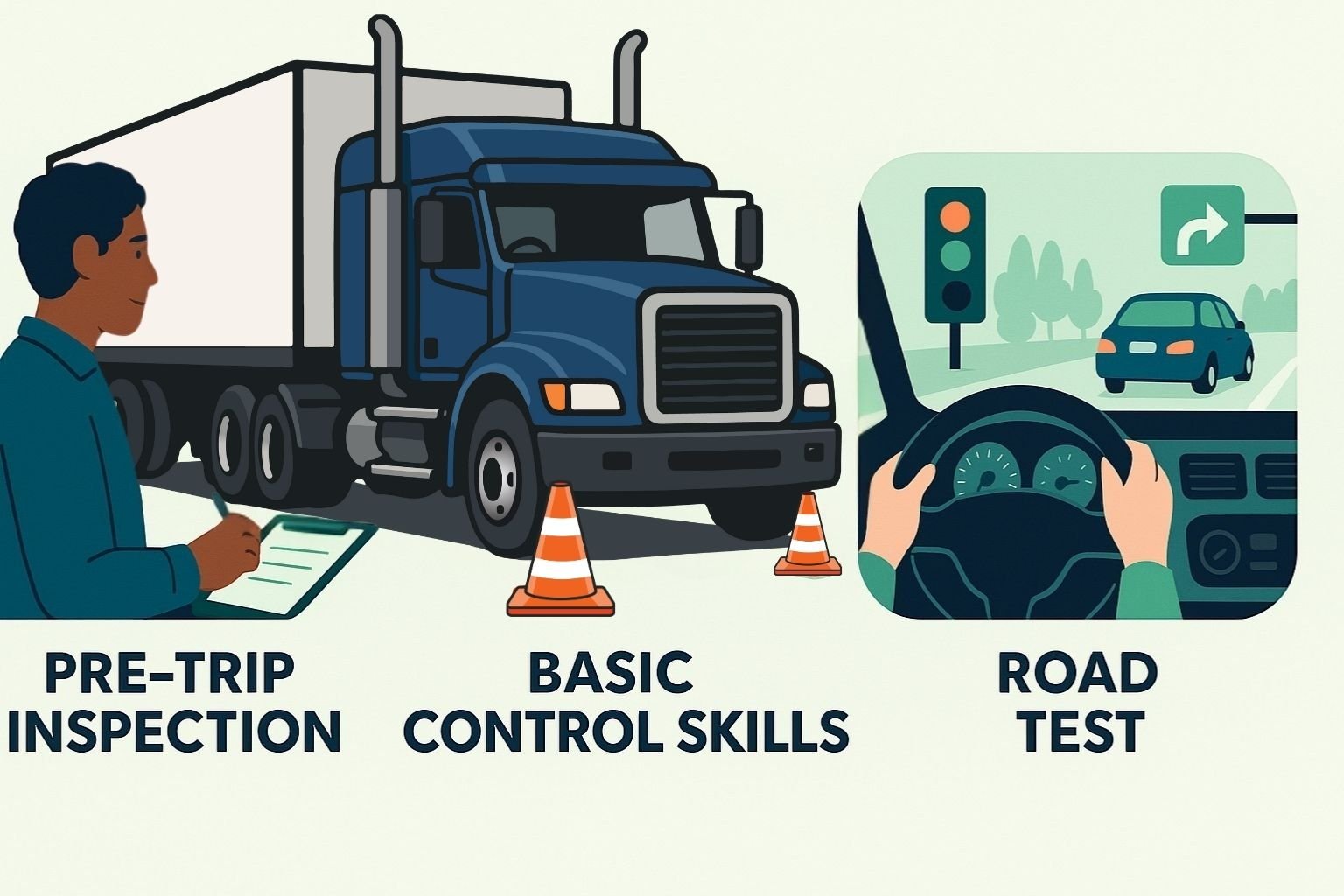
The test is broken up into three parts: the Pre-Trip Inspection, the Basic Control Skills Test, and the Road Test.
Each one has a different purpose, but they come together to show whether a driver can handle themselves out on the road.
The pre-trip inspection is the first thing you’ll do before the wheels ever move. It’s a walk-around check that shows you understand your equipment.
The goal is to make sure the vehicle is safe to operate and everything is working the way it should.
You’ll look over parts like tires, brakes, hoses, lights, mirrors, and fifth wheel.
You’re checking for leaks, damage, or anything that could cause a breakdown or accident once you start driving.
This step is about more than passing the test. It’s about being systematic and knowing your equipment to catch problems before they catch you.
That kind of attention to detail keeps you safe, keeps others safe, and shows that you take pride in what you do.
Next comes the part that tests how well you can handle a truck in tight spaces.
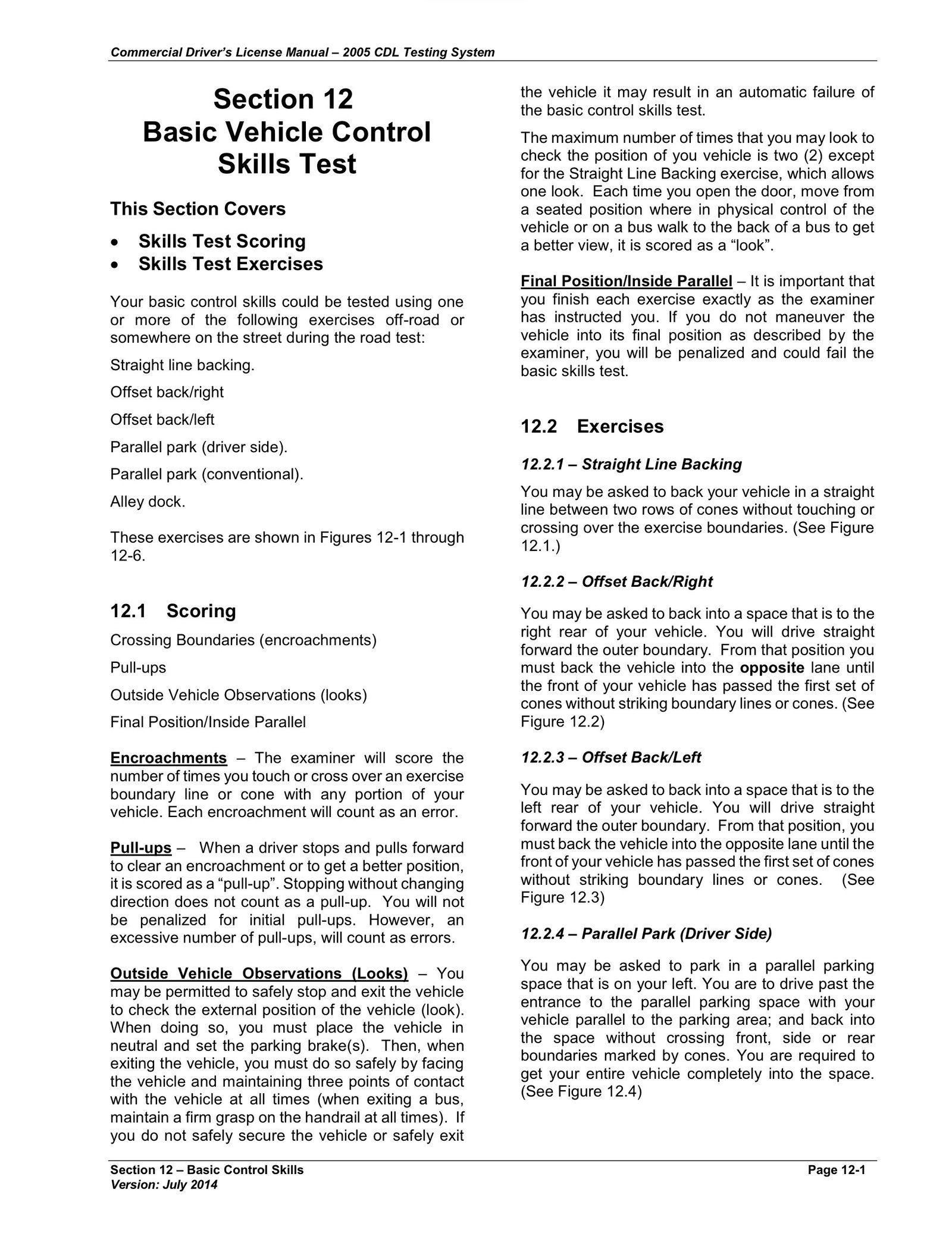
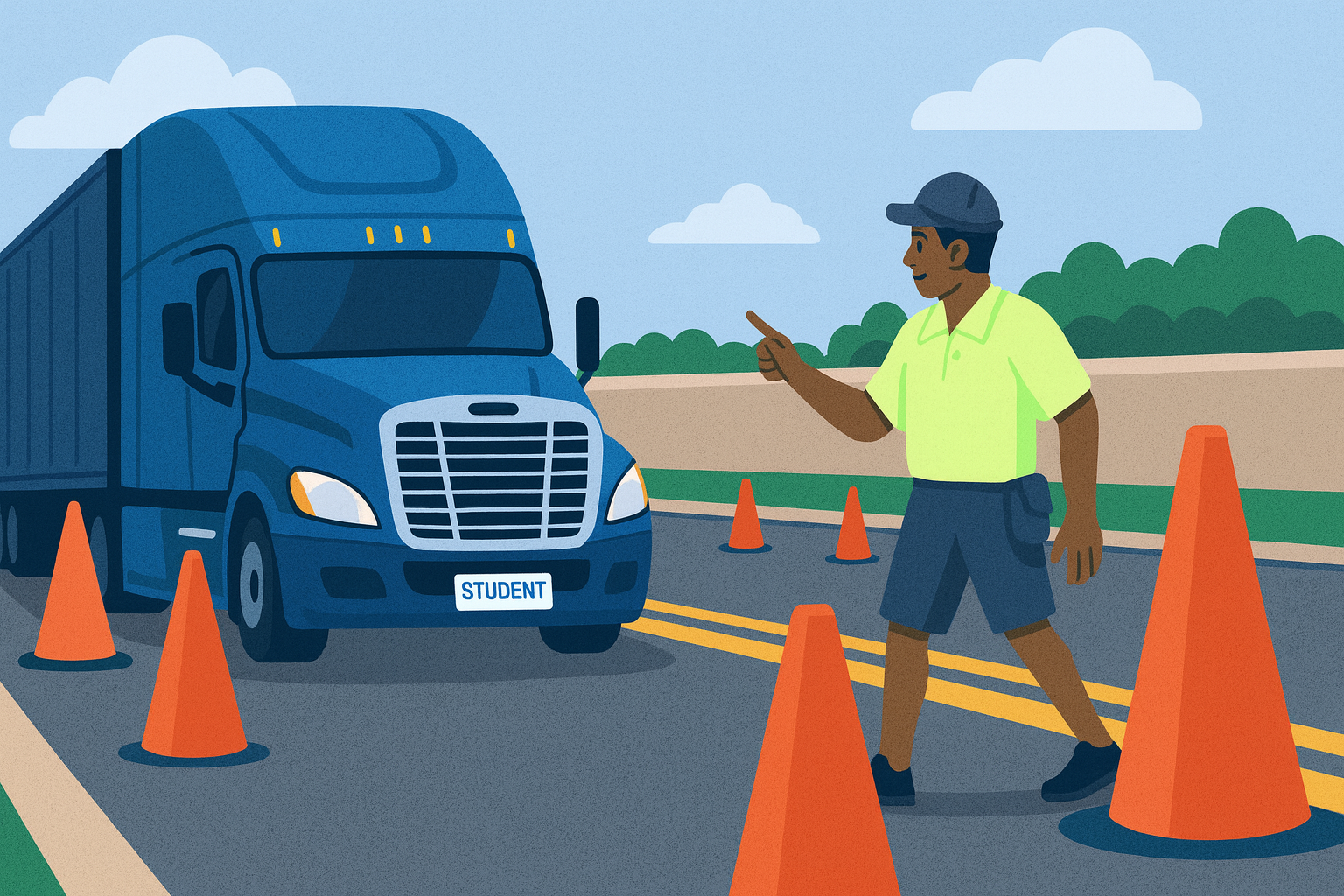
The basic control skills test happens in a closed yard or practice lot. You’ll perform low-speed maneuvers like straight-line backing, offset backing, and sometimes parallel parking.
This section is all about control, awareness, and capability. It shows whether you can move the truck exactly where it needs to be.
You’ll be using your mirrors, make small adjustments, and keeping your composure when spacing is limited.
These same skills are what you’ll use every day on the job:
If you can master basic controls, it will save you time, money, and a lot of frustration out on the road.
The final part of the CDL skills test takes everything you’ve learned and puts it to work. The road test moves you out of the yard and into real traffic.
This is where you prove you can drive safely in real-world conditions.
You’ll make turns, change lanes, stop smoothly, and manage the space around your truck.
You’ll show that you can stay alert, anticipate what’s happening ahead, and make good decisions while on the road with everyone else.
During the road test, you’ll run into all types of driving situations. Intersections. Highways. Railroad crossings. City traffic.
The road test shows you can put it all together safely in real traffic. Pass them all, and you’ll know you’re not just ready for the test, but for the road.
How long does the CDL skills test take?
The full CDL skills test usually takes about two hours from start to finish, depending on your state and how busy the testing site is. The pre-trip inspection is the longest part since it covers a full walk-around and explanation. The backing and road test portions move quicker once you’re in the truck.
Can I retake just one part of the test if I fail?
In most states, yes. If you fail one section, you can retake only that section instead of starting over from the beginning. For example, if you pass the pre-trip and road test but fail the backing, you only need to retake the backing portion. Just keep in mind that most states limit how long your passing scores stay valid, so don’t wait too long to schedule your retest.
What kind of truck will I use for the test?
You’ll test in the same type of vehicle you trained on or the one you plan to drive professionally. If you test in an automatic truck, your CDL will have an “automatic restriction,” meaning you can’t drive a manual until you retest in one. It’s best to train and test in the transmission type you plan to drive for work.
What happens if I forget a step or miss an item?
It depends on which part of the test you’re on. Forgetting a small detail usually just costs a few points. But skipping major safety steps like; forgetting to check air brakes or rolling through a stop sign can automatically fail you. So take your time and double-check yourself before moving on to the next portion of the test.
Can I use notes during the test?
No. The CDL test is meant to show what you know and can do without help. You can study and practice beforehand, but once the test starts, you’re on your own. That’s why repetition and asking questions when you don’t understand something matters so much during training.
How many times can I take the CDL test if I fail?
Most states will allow you to retake the skills test multiple times, but you may have to pay a retesting fee every time. Some states limit the number of attempts within a certain period. It’s always better to review what you did wrong after your first try and focus your next practice sessions on that specific area.
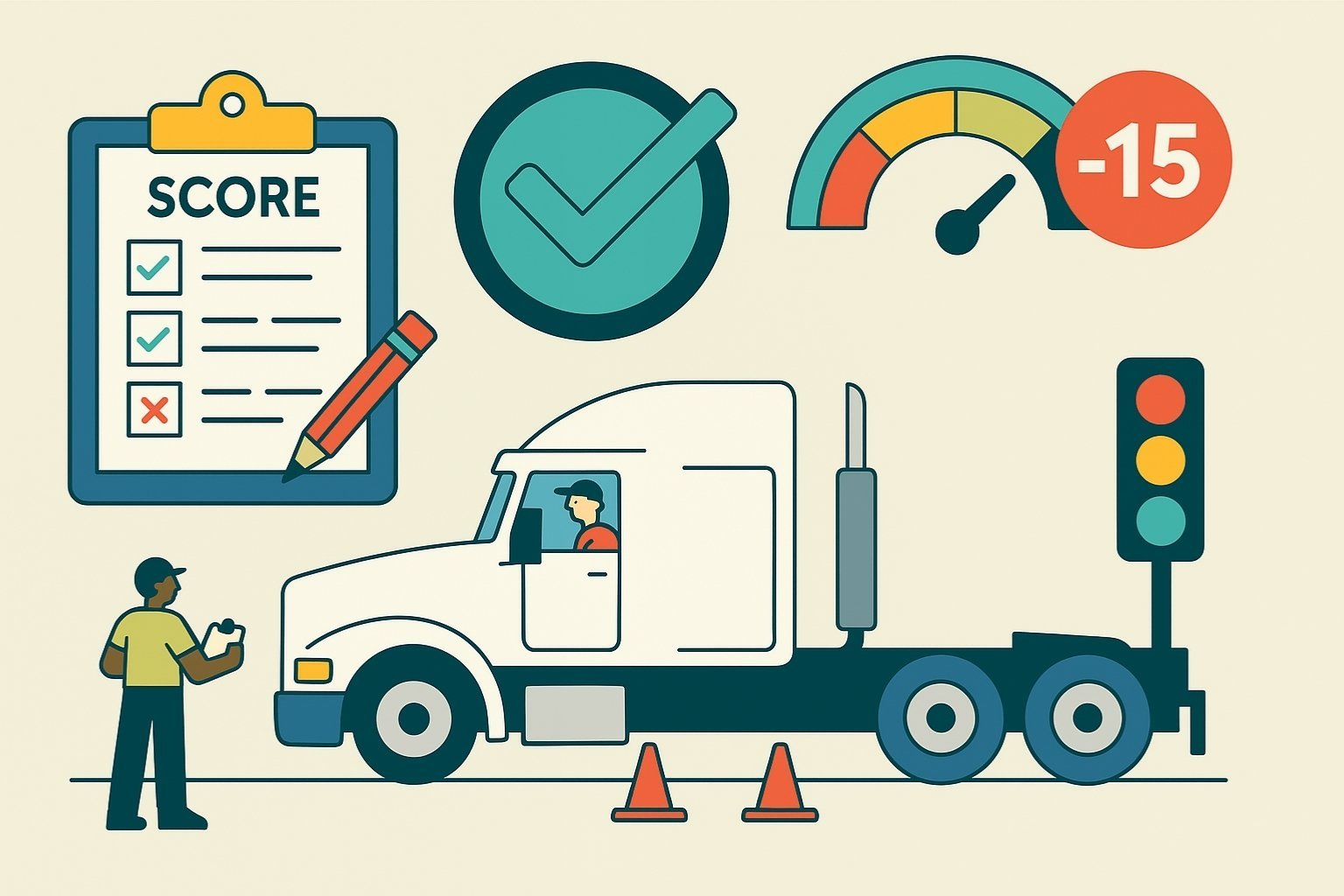
Most folks walk into the CDL test thinking it’s just like they practiced in CDL school. They’ve done it a hundreds of times.
The cones. The backing. The pre-trip inspection. They believe they’ve got it locked in.
But the test feels different. It’s quieter. The examiner only says a few words (and they’re usually just instructions) but that silence changes everything.
At this point, your heart is beating through your chest. The stuff you learned in school has slowly started to slip out of your mind.
This isn’t practice anymore, this is the real deal.
That’s what makes the test totally different. It’s not about how long you’ve been practicing or how good you were yesterday.
It’s about what you do under real pressure. It’s really about whether you can stay flexible, attentive, and focused when every move is being watched.
Most people don’t fail because they can’t drive. They fail because they don’t understand the small things that the examiner is paying attention to.
When you don’t know what counts, it’s easy to get nervous during this time.
But when you do understand the scoring, everything changes. You’ll stop second-guessing yourself because you know what matters and what doesn’t.
That’s when you show them that you’re not just another student, you’re a driver who’s ready for the road.
“The CDL skills test is divided into three parts: pre-trip, basic control skills, and road test that must all be passed separately.”
Source: FMCSA Model Commercial Driver’s License Manual, Sections 12–14 (AAMVA)
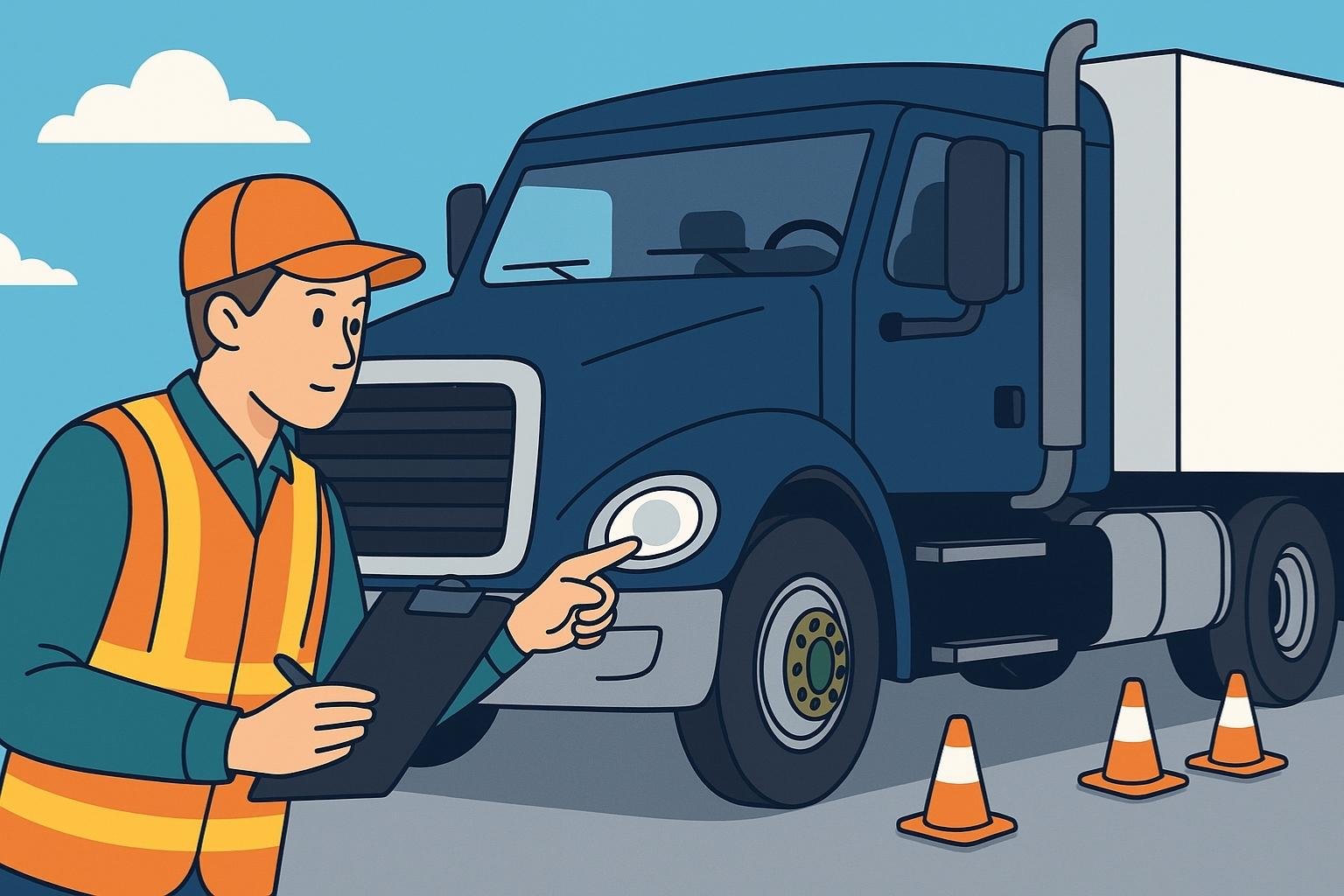
Before the truck ever moves, the pre-trip inspection is the first real test. The examiner is already paying attention to how you move.
They notice if you walk up to that truck like you know it, or if you’re hesitant.
They see whether you know each truck component or if you’re looking around trying to remember what it does and what to look for.
They listen to the tone in your voice when you explain what you’re checking. This doesn’t mean you’ll fail but it sets the tone.
This part is about showing that you understand the truck and what a safe commercial motor vehicle (CMV) looks like.
You earn points for every part you identify and describe correctly. When you touch a component, you name it and explain what you’re checking for.
For example, you might say, “The brake hose is properly mounted, no leaks, no cracks.” Clear, and confidently.
What costs people the most points is skipping things that matter. Forgetting the brakes. Skipping over steering parts. Not explaining the fifth wheel.
Those are important systems, and missing them can lead to an automatic failure.
You’re not being tested on how well you can memorized a script. Again, you’re being tested on whether or not you know what a safe truck looks like.
That’s the difference between guessing your way through it and passing the test.
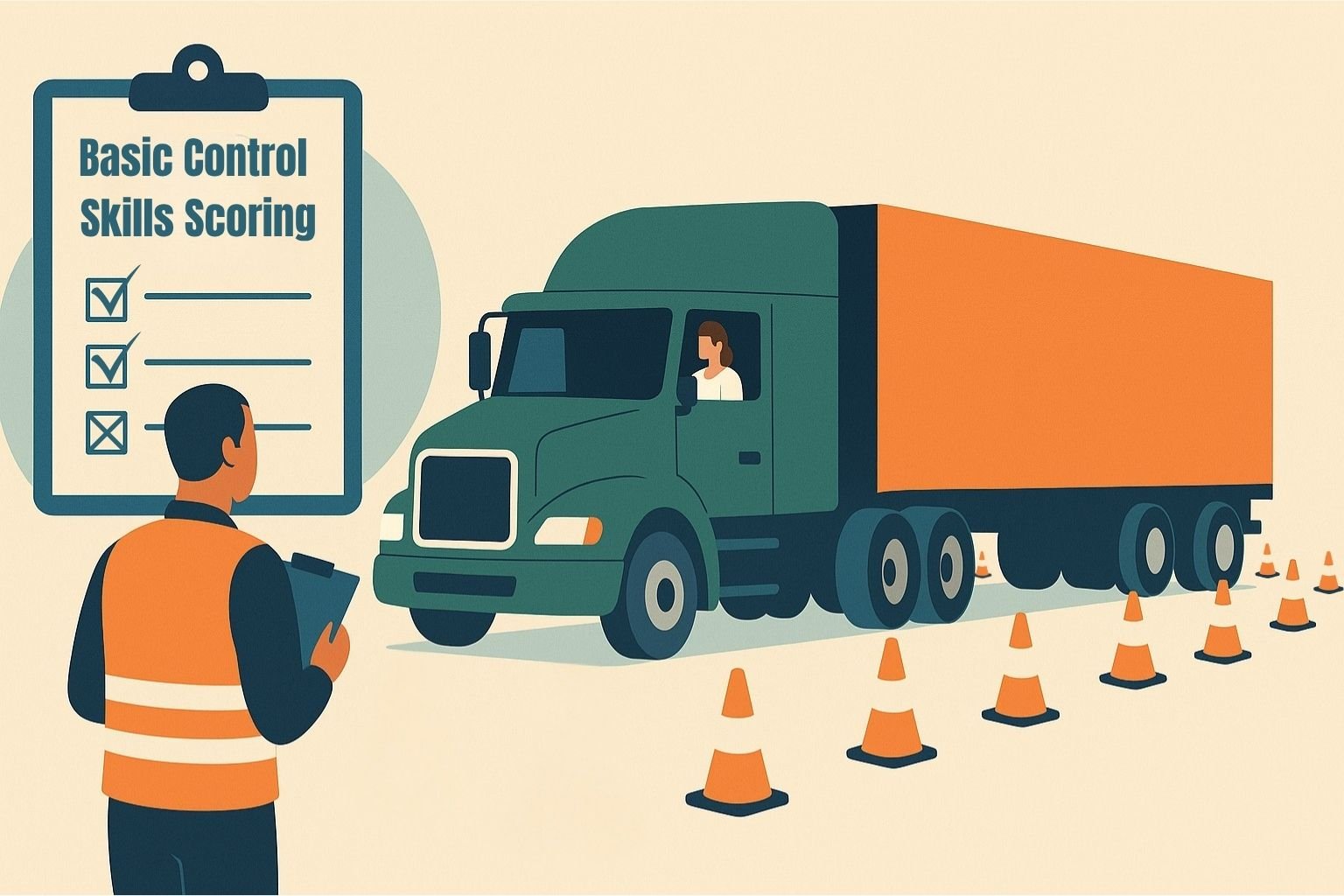
Once the pre-trip inspection part is done, it’s time to see if you can control the truck when the space is tight.
If you weren’t nervous before, now is usually when things turn up a notch. Most people can back the truck and trailer straight without a problem.
But when it’s time to back that big rig into a box or angle the trailer around a cone, everything they thought they had down starts to feels different.
The examiner watches how you set up each maneuver. That setup tells them a lot.
Do you know how to position the truck, or are you guessing?
They notice how well your steering is. Whether you’re checking your mirrors or just hoping the trailer goes where you want it to.
Each backing maneuver: straight-line, offset, and sometimes parallel all have clear boundaries marked with cones or painted lines.
Every time you touch or cross one, you lose points.
You’re allowed to pull forward and readjust, but every pull-up counts against you. If you need to get out and look, that’s perfectly fine, but there’s a limit. Use your pull-ups wisely.
What they want to see is that you’re in control of the vehicle. Not necessarily how fast you can back in between cones. Not luck. But control!
That means knowing what the trailer will do before it does it. It also means making small steering adjustments as you move the truck to angle the trailer into the spot.
When you move too fast or start panicking, the trailer lets you know what you need to do. It swings wide. It cuts too sharp. And that’s how people lose points that they didn’t have to.
The drivers who pass this portion know what to look for. They think before they move. They set the truck and trailer up right, watch their mirrors, and take their time.
You can tell when someone’s knows what they’re doing because nothing they do looks forced. It looks precise, practiced, and like they’ve done it plenty of times before.
If you treat every move like it matters, you’ll keep more points and a lot more confidence.
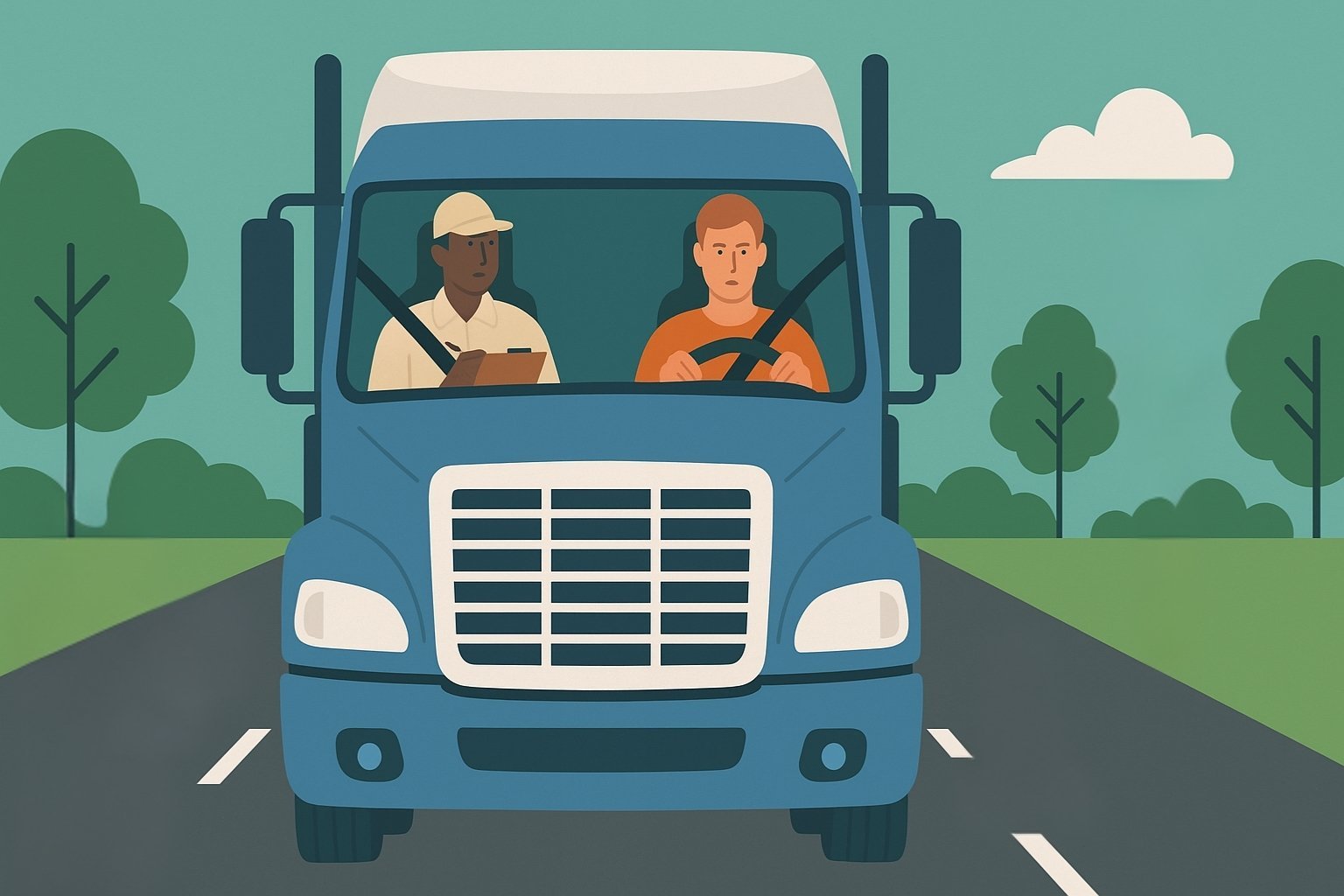
The road test is the final portion and is where everything comes together.
It’s the part most CDL test takers look forward to because it’s the last part of the test, but it’s also the one that exposes every good and bad habit you’ve developed.
By now, the examiner has seen how you handle the truck in the yard. Out here, they want to see how you handle real driving situations.
Once you pull out onto the street, they’re watching everything.
How you check your mirrors. How you take turns. How you shift. How you handle space around your truck.
The road test is all about decision making and awareness, but this time, the environment is unpredictable. Cars cut you off. Lights change.
Traffic flow can shift from fast to slow at any moment. It’s your job to expect it and stay ahead of it when it happens.
Most states use a point system for this part. You start with a perfect score, and as you go along, the examiner will deduct points for each mistake.
Miss a mirror check, drift out of your lane, or forget to signal, then you’ll lose points. These mistakes can add up quickly, especially if you’re nervous.
There are a few things that will end your test immediately though. Here are the main ones:
Anything that shows unsafe driving will end the test right there. Safety isn’t just part of the test, it’s the main reason for it.
What the examiner is watching for is to see that you think ahead, anticipate traffic, and make adjustments when necessary.
Missing a gear won’t fail you. Jerky shifting won’t either.
But losing focus or rushing through a turn can. The difference between a pass and a fail comes down to decision making and awareness.
The drivers who pass this part of the test take their time, stay calm and show what they’ve been trained to do.
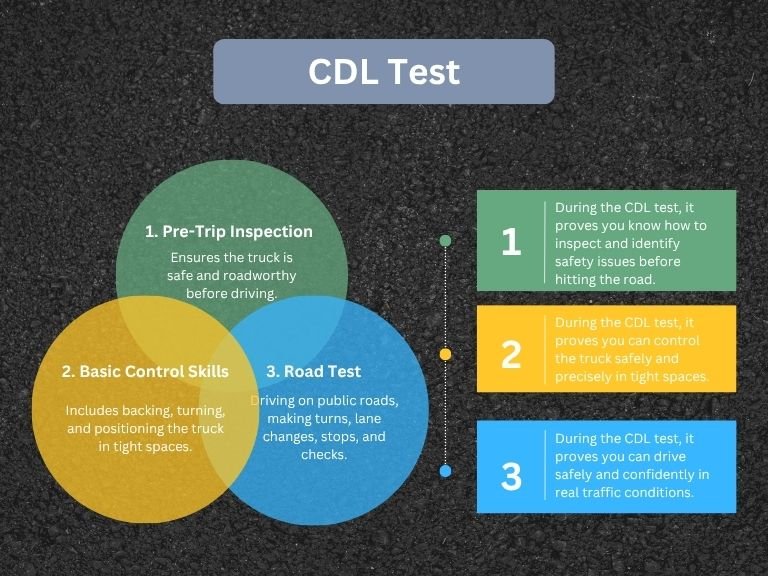
Every part of the CDL skills test comes together to show one thing: Can you control CMV.
The pre-trip shows if you understand your equipment. The basic control skills show whether you can handle it in tight situations.
The road test shows whether you can drive it safely when the environment around you changes.
None of these sections are independent of one another. They build on each other and are required as a truck driver.
What most people forget is that the examiners are looking to see that you pay attention, think before you move, and stay calm when things don’t go exactly as planned.
That’s what separates a person who just practiced from someone who’s ready. If you make a mistake, don’t freeze up. Correct it if you can, stay composed and move on.
A missed gear or a small adjustment doesn’t cause you to fail your test, not knowing what you’re doing or losing your composure does.
The people who pass aren’t always the ones who drive the best. They’re the ones who make adjustments the fastest.
They stay steady, correct what needs fixing, and finish what they start.
When you understand how the test is scored, the pressure feels a lot different. It stops being about impressing the examiner and starts being about showing that you can handle the job.
That’s the moment when you stop feeling like a student and start becoming a professional trucker.
Do I start with points CDL test or earn them as I go?
It will depend on the section of the CDL skills test. During the pre-trip inspection, you start at zero and earn points for the components that you can correctly identify and explain. During the backing and road tests, you start with a perfect score, and points are deducted for mistakes as you go. Scoring is designed to measure consistency, not perfection.
How are points deducted during the CDL skills test?
Each state uses its own scoring system, but most follow the same basic structure from the FMCSA. You can think of it like this:
Most states require a score of at least 80 percent on each part to pass the CDL test. It’s not about being flawless, it’s about doing your best and avoiding big mistakes.
How many points can I lose and still pass?
Every state has its own passing standards, but most follow the same structure. You usually need at least an 80 percent score on each section to pass. Small mistakes add up, but they don’t end your test unless they show unsafe driving. If you stay focused and avoid big errors, you’ll still be in good shape.
What counts as an automatic CDL test failure?
Anything that puts safety at risk. Rolling through a stop sign. Speeding. Hitting a curb, cone, or another vehicle. Skipping a brake check. Ignoring a railroad crossing. Any of those can stop the test immediately. Examiners are making sure that can drive a truck safely and obey traffic laws.
If I hit a cone during the backing test, will I automatically fail?
Not all the time. It really depends on what happens when you hit it. If you lightly bump a cone but stay in control of the truck, you’ll usually just lose points. The cone might move or wobble, but as long as it doesn’t fall over you can reset and try again.
If you knock a cone over, crush it, or drive completely outside the boundaries of the maneuver, that’s considered a fail. However, you can still continue the other parts of the test.
The test isn’t made to punish you for small mistakes. It’s designed to see how well you can control a truck. Touching a cone isn’t the problem, not having control is.
Do all states and their state examiners grade the same way?
Not exactly. Every state follows the same federal testing standards, but each examiner has their own way of running the test. Some talk more, most stay quiet. Some might seem strict, but they’re all trained to score using the same rules.
Can I fail for stalling the truck?
Not automatically. If you stall once, regroup, restart the truck, and keep going, you’ll only lose a few points. What matters is how you handle it. If you panic, forget important steps, or roll backward into traffic, that’s when it turns into a major deduction or automatic failure.
What if I get nervous and make a small mistake early on?
Keep going. Everyone makes small mistakes during the test. What’s important is how you respond. Examiners watch how you react just as much as the actions take. Trying to correct a mistake or staying calm after the mistake can actually work in your favor because it shows your awareness.
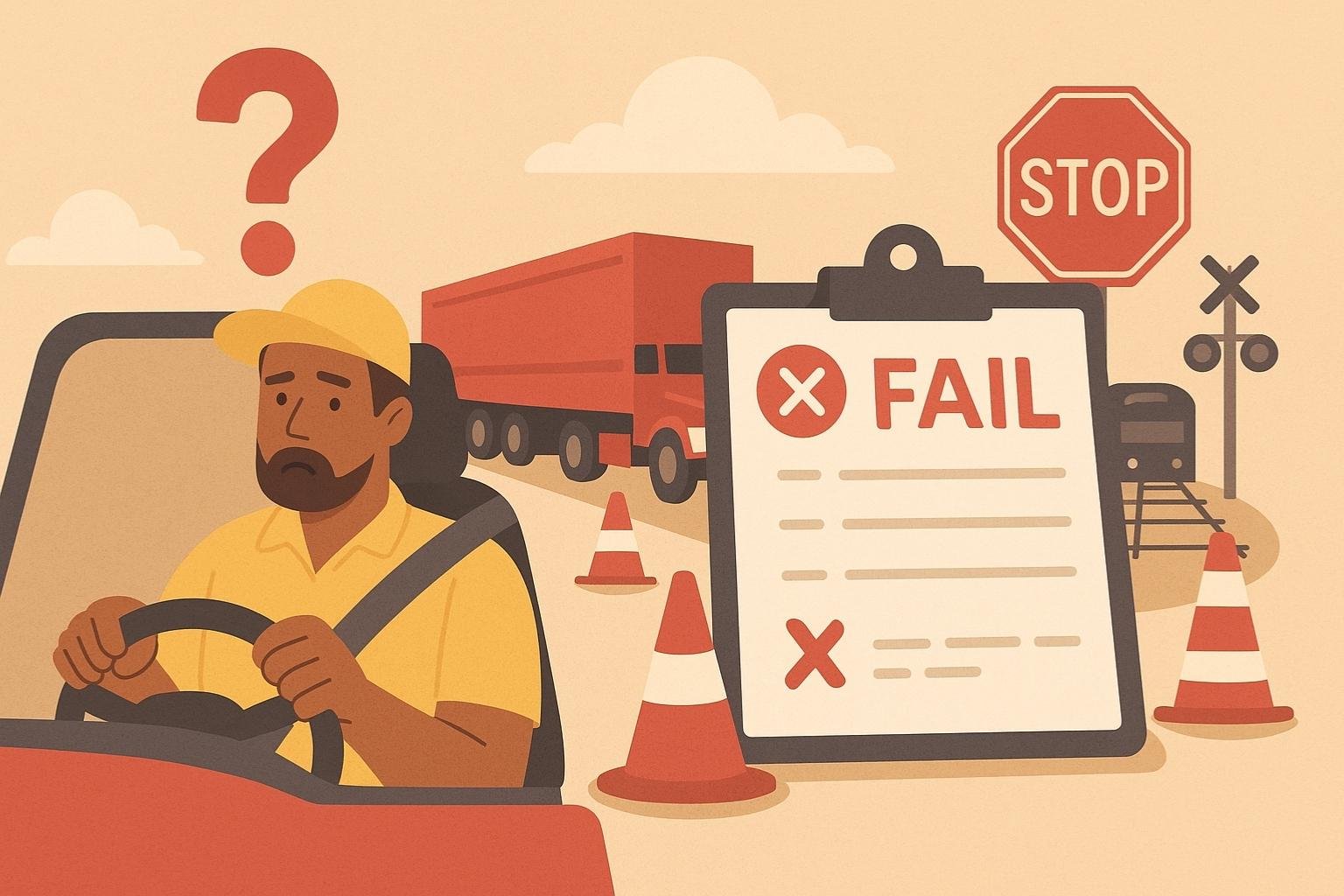
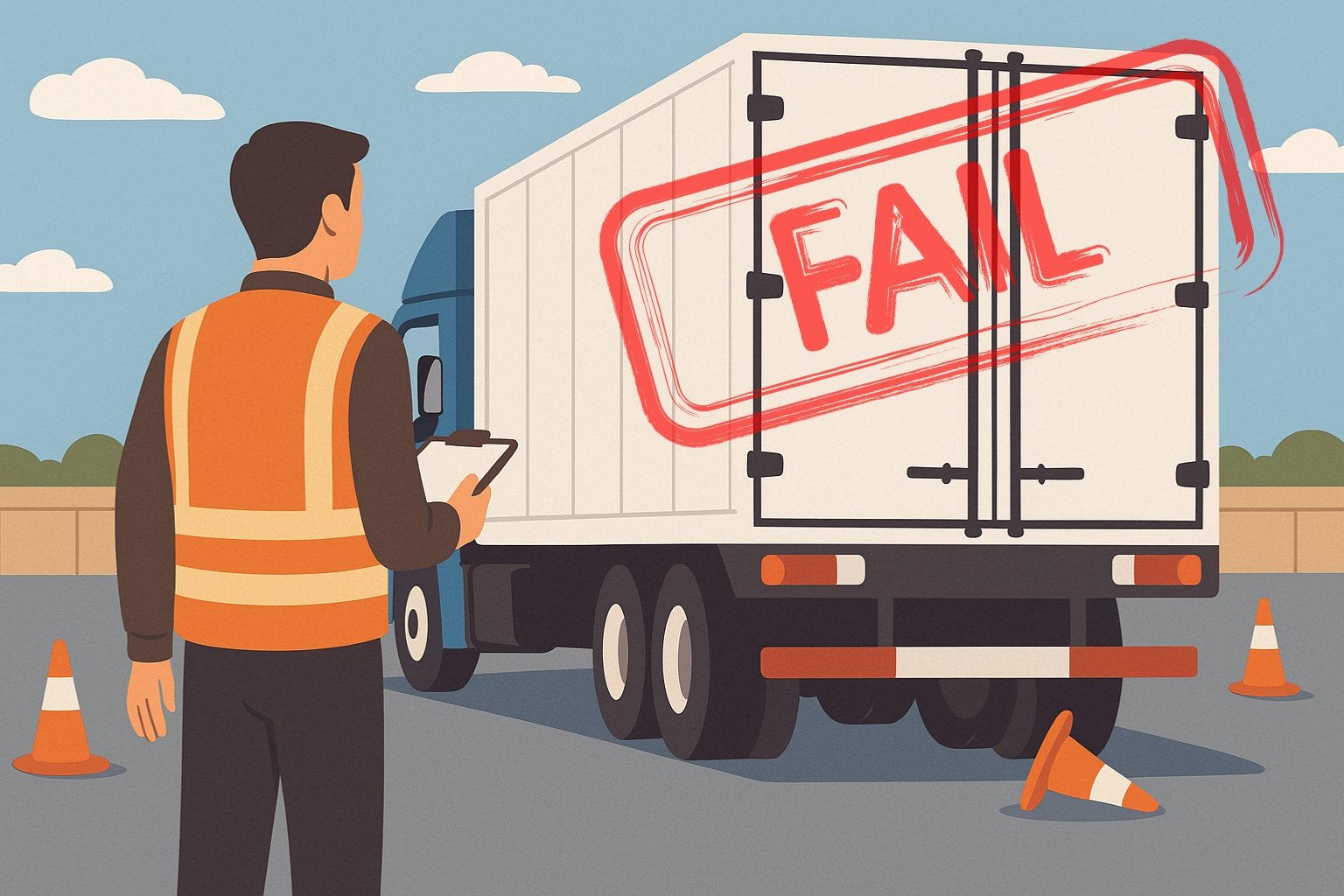
Most people don’t fail the CDL test because they can’t drive. They fail because they lose focus when it really matters.
You’d be surprised how many students show up ready, confident, and knowledgeable only to fall apart under the pressure.
The skills test isn’t about talent. It’s about control of the truck and control of yourself. Here are 5 of the most common reasons people fail and how to keep from joining that list:
This is the first section, and it sets the tone for the rest of the test. Too many people treat it like a checklist instead of a safety inspection.
They skip steps, mix up parts, or freeze when they forget a name. The examiner doesn’t expect perfection, but they want to see that you know your truck.
Slow down. Speak clearly. Think safety, not speed.
This one takes out more drivers than anything else. The second you oversteer, most people panic.
They crank the wheel the wrong way or start guessing instead of correcting. That’s where the points start adding up. When you make a mistake, stop.
Breathe.
Think about your setup, make a small adjustment, and keep going. Calm drivers pass. Nervous ones usually fail.
When nervousness kick in, people forget simple stuff like using turn signals or checking mirrors. Examiners don’t miss those things, they’re watching everything little thing.
The road test isn’t about how smooth you shift or how fast you finish. It’s about awareness, control, and safety.
Every time you check your mirrors, signal early, and manage space, your examiner notices and it reflects in the scoring.
Too many people make a mistake they could have avoided if they knew what to watch for.
Rolling through a stop sign, crossing a boundary line, forgetting to set the parking brake are instant fails. Knowing what can end your test helps you avoid it.
This one gets even good drivers. They know what to do but get so tense that they rush through maneuvers, miss callouts, or freeze up mid-test.
Remember, the examiner isn’t there to try and fail you. They just want to make sure that you can safely operate a commercial motor vehicle.
You fail yourself by not demonstrating that you know what you’re doing.
Too many drivers walk in believing the examiner’s job is to fail them, not test them. That mindset kills focus. The examiner isn’t your enemy.
Their job is to make sure you can drive safely, not like you’ve been driving for 20 years.
When you start focusing on their face instead of your mirrors, that’s when you lose track of what you’re supposed to do.
Stay in your lane, stay in control, and prove you’re ready for the road.
“You fail yourself by not demonstrating that you know what you’re doing.”
Passing this test is about your mindset just as much as your skill level.
If you can slowdown, focus yourself, and perform the way you’ve been taught, you’ll do things the way you practiced them.
The ones that FAIL are the ones who try to survive the test. The ones that PASS are the ones who take control of it.
Once you understand why people fail you can start focusing on how to perform your best when it counts.
What’s the most common reason people fail?
Most drivers fail during the backing portion. It’s where pressure hits the hardest. People over-steer, rush, or lose track of the trailer. Staying calm, setting up correctly, and using your mirrors makes the difference.
How can fear make someone fail?
Being nervous or fearful causes hesitation and second-guessing. When you rush or doubt yourself, small mistakes add up. Slow down, breathe, and treat it like another practice run.
Can the examiner fail me for a bad attitude?
Not necessarily. They score your performance, not your personality. But if you argue, ignore directions, or show bad attitude, it does affect how smooth the test goes.
Do people really fail because they think the examiner’s out to fail them?
Yeah, it happens a lot. When you think the examiner wants you to fail, you start focusing on them instead of passing the test. The test is about competence, not competition.
Can I retake the CDL test if I fail more than once?
Yes. You can retake it as many times as your state allows, but there’s typically a fee for each attempt. Most people pass on their second or third try once they calm down and practice on their weak spots.
Passing the CDL test is about how you handle yourself when you’re under pressure. Most people treat the CDL test like it’s a pop quiz instead of a performance review.
You’re not there to impress anyone. You’re there to show what you know. Here’s how to keep your score high and stay in control, even when you feel anxious.
Don’t just memorize the steps, understand the process. Each truck and trailer component has a specific function, while in training focus on understanding how they work.
When doing your pre-trip inspections, speak out loud, get comfortable with your backing maneuvers, and practice on roads with real traffic conditions as much as possible.
The more realistic your practice feels, the easier it’ll be on test day.
Backing success starts before you move an inch. Set up correctly, use your mirrors, and predict your trailer’s path.
When you start right, you finish right. Knowing how to set up the truck and trailer is the secret weapon for drivers who pass easily.
Most failed tests happen because drivers get ahead of themselves. Don’t worry about what’s next while you’re still in the middle of a maneuver.
Slow it down, focus on your current task, and complete it before focusing on the next one. That’s how you make sure that you don’t skip anything.
Mistakes happen, even in the real world of trucking but what matters is that you understand how to fix them.
If you miss a gear, regroup. If your trailer drifts, stop, correct, and try again. Examiners care more about whether you can recover than being flawless.
Eat light, sleep well, and get there early. Walk the range before your name’s called. Familiarity helps but routine helps more.
Small habits like stretching, breathing deep, or visualizing how you’ll do tasks make a huge difference when adrenaline hits.
Follow directions, stay respectful, and communicate if you don’t understand something.
Test examiners are not your opponent, their job is just to decide if you’re ready to handle being in control of a semi truck and trailer.
Show them you take it seriously by proving that you’ve been paying attention during your training.
You don’t need to be the veteran truck driver to pass. You just need to drive like someone who understands the basics.
When you can stay calm, perform the task at hand, and keep your focus, you’ll pass the CDL test with no problem.
What’s the best way to stay calm before the test?
Breathe and take your time. Nervous drivers rush, and that’s when mistakes happen. Get there early, walk around the lot, and ask questions. When you have questions or concerns, you tend to lose control of your mind and your focus.
How much should I practice before taking the CDL test?
As much as possible but under as many real conditions as you can. Don’t just practice until you get it right, practice until it feels natural. That means full pre-trips out loud, multiple backing maneuvers, and plenty of time behind the wheel with real traffic. Confidence comes from completing tasks you thought were impossible and seeing growth from previous mistakes.
If I make a mistake during the test, should I mention it?
No, I wouldn’t call attention to it. Just correct it and move on. Examiners pay attention and know that you’ve made a mistake. What matters is how you recover more than how you make mistakes.
How can I make sure I set up right for backing?
What I like to do is start by walking to the exact places I want the truck and trailer to go. Then, once you’re in your truck, you just follow the path that you created in your mind. Set your steering wheel straight, position your truck correctly, and use your mirrors. A good setup makes everything easier. Take your time, rushing the setup is what takes the longest to correct.
How should I handle the examiner during the test?
Treat them like an instructor on your first day of training. Be respectful, calm, and attentive. Follow their directions, don’t argue, and don’t overthink their silence. They’re not judging your personality. They’re checking whether you can handle a CMV (commercial motor vehicle).
What’s the biggest thing that separates people who pass from those who fail?
Competence and patience. The ones who pass know how to stay steady when things don’t go perfectly. They make good decision, don’t rush, and stay focused on what they need to do, not what the don’t need to do.
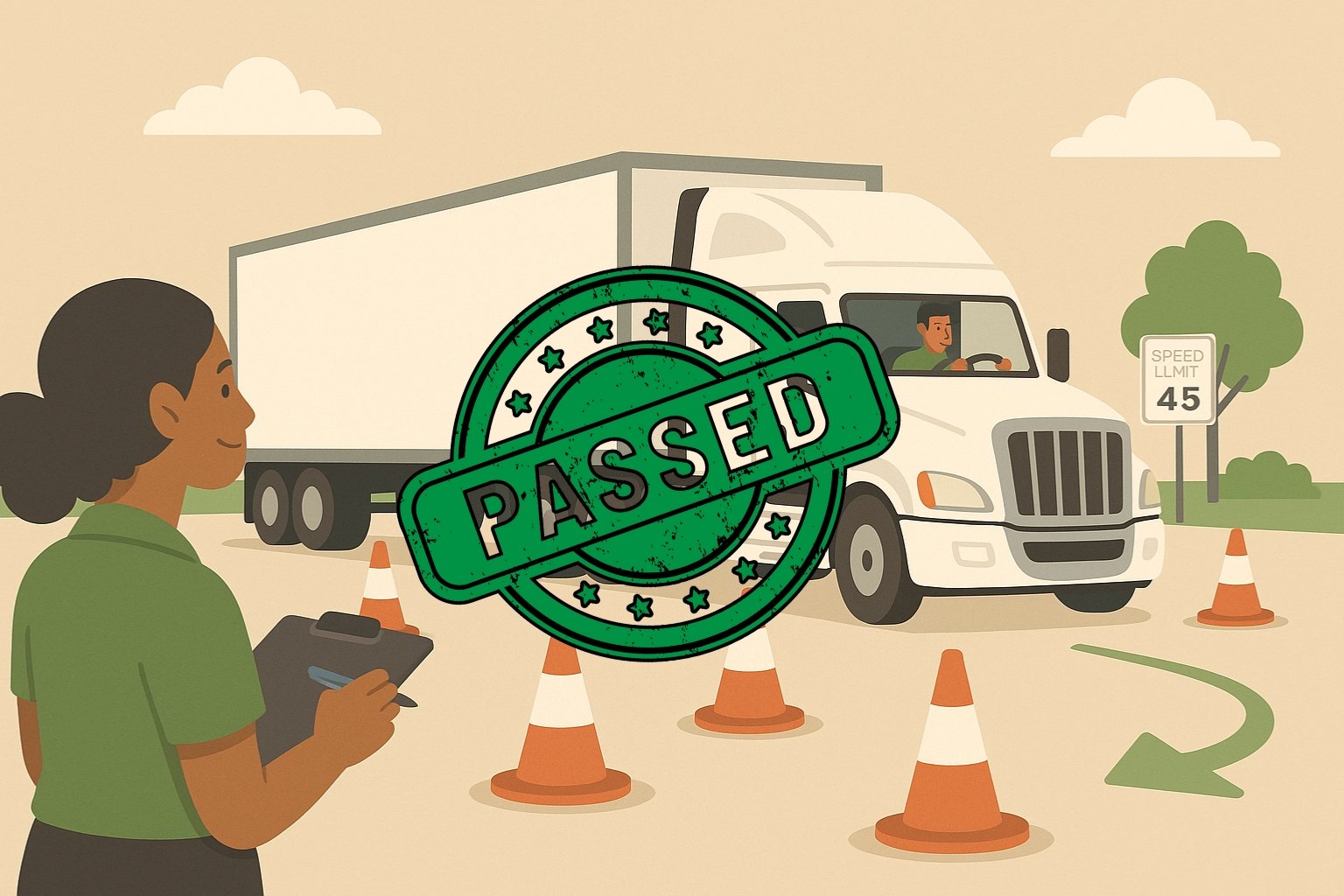
A lot of people walk out of the test thinking they failed when they didn’t.
Why?
Because they think the CDL exam is about being flawless. It’s not. It’s about proving you can handle a commercial vehicle safely and consistently. That’s it!
Passing doesn’t mean you didn’t make mistakes. Everyone makes them. You might stall once. You might touch a line backing in. You might forget to check a mirror.
That doesn’t end your test. What matters is whether you stay in control, fix it, and move forward.
Each section of the skills test has its own passing score. Most states use an 80 percent threshold, meaning you can lose points and still pass as long as you stay above that mark.
Examiners are looking for knowledge, awareness, and safety, not speed or giving you style points.
Think about it like this: they’re grading whether you’re ready to safely drive a loaded truck that can weigh with up to 80,000 pounds down a highway with other people. That requires good decision making skills and being responsible.
When you pass, it means that you’ve shown enough skill and awareness to earn the trust of sharing the road, protecting cargo, and keeping people safe.
Passing your CDL test is bigger than just a score on paper. That’s your license to go make a living in a very dangerous field.
Do I have to pass every part of the CDL test?
Yes. The CDL skills test has three sections: pre-trip inspection, basic control skills, and road test, you must pass each one to be qualified for a CDL. Failing one section means you’ll have to retake that part before your CDL can be issued.
How many points can I lose and still pass?
Each state sets its own scoring rules, but currently most follow an 80% passing threshold. That means you can make small mistakes and still pass as long as you stay safe and don’t make major mistakes.
If I fail one section, do I have to start over?
Not usually. Most states let you keep your passing scores for a limited time, typically 30-90 days. So you can retake only the section you failed. If you wait too long, your scores will expire, and you’ll have to redo the whole test.
Can I fail for something small, like stalling the truck?
No. Stalling once or twice won’t fail you. What matters is how you handle it. Stay calm, restart the truck, and keep moving. You only fail if you create an unsafe situation or lose control of the truck.
Is the CDL test the same everywhere?
Not exactly. All states follow FMCSA testing standards, but each state’s DMV may have scoring details or retake policies. Always check your state’s CDL handbook before testing to see the most current regulations.
Passing the CDL test isn’t about luck. It’s about preparation, patience, and showing that you know what you’re doing, when it counts.
Every person who steps onto the test range feels some pressure.
The difference between those who pass and those who don’t usually comes down to control, not just of the truck, but of themselves.
If you’ve made it this far, you already have what it takes. You understand what’s being tested, how it’s scored, and why so many people stumble.
Now it’s about showing up ready to prove it. Take your time. Trust your training. Handle each part of the test with focus and confidence.
Whether you’re checking your lights, backing into position, or rolling through traffic, move like someone who belongs there.
Because once you earn that CDL, it’s not just a license, it’s a key. It opens doors to new opportunities, new paychecks, and a new way of life.
Passing the test proved that you can drive but getting hired proves that you’re ready for the road.
Read this post on how to land your first trucking job, where to look, what companies want, and how to stand out even without experience.
Getting your CDL is one thing but starting your career as a truck driver is a completely different one.
Take the guesswork out of your first year. The Trucking Success Newsletter gives you practical, real-world strategies to stay safe, stay paid, and stay ahead of the average rookie.

T.K. Keith – “The Truckers Trainer”
After spending 20+ years as a trucker and over six years training new drivers. I know first hand the ups, downs, and lessons that come with the first year behind the wheel. Ready, Set, Truck! is my way of helping new drivers build confidence, make more money, and find success in trucking.
Readysettruck.com
No elements found...
Ready, Set, Truck! helps drivers succeed in their first year on the road with tools, tips, and resources to avoid going broke, burning out, or giving up.
TOOLS
Copyright © 2025 Ready, Set, Truck! LLC. • All Rights Reserved • Privacy Policy • Legal Policies